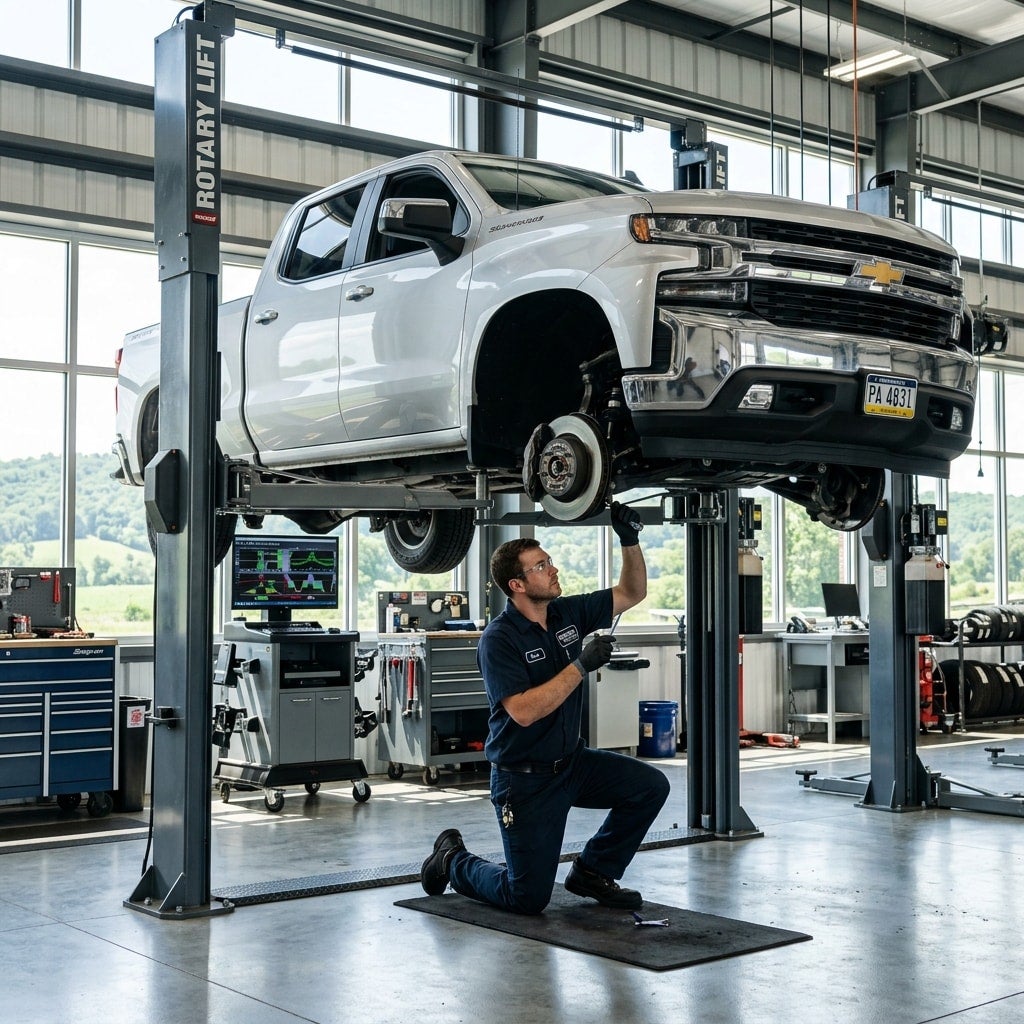





By Outten Chevrolet of Hamburg
A small tread puncture may be repairable after an internal inspection; shoulder damage, sidewall injury or damage from driving flat usually means replacement. For a Reading or Schuylkill Haven driver losing air on the Route 61 commute, the location and condition of the damage decide the job. Outten Chevrolet of Hamburg provides tire service at 1080 South Fourth Street.

Quick Answer
- Maximum puncture reference: 1/4 inch.
- Repair zone: eligible tread area.
- Sidewall injury: replacement needed.
- Permanent repair: internal inspection required.
The nail’s location changes the Reading repair
The U.S. Tire Manufacturers Association limits passenger and light-truck puncture repairs to eligible damage in the tread area, with a puncture no larger than 1/4 inch, or 6 millimeters. An injury that reaches the shoulder or belt edge is outside that repair area. The object’s visible position can also hide an angled path through the tire.
That distinction matters on a nearly new tire as much as an older one. A Reading driver may have plenty of tread remaining but still need a replacement because a screw entered at the shoulder. The tire department inspects the damage and recommends repair or replacement. Remaining tread alone gives only one part of the answer.
The inside must be inspected
A punctured tire is removed from the wheel before a permanent repair. The technician inspects the inner liner and structure, including signs of damage from running with insufficient air. The industry repair method fills the injury channel and seals the liner with a patch; the two jobs address different paths for air or moisture to enter the damaged area.
A plug installed entirely from outside leaves the inner surface unseen. Michelin and USTMA both require an internal inspection for a proper puncture repair. For someone driving between Pottsville and Schuylkill Haven, that inspection is the useful difference between restoring a suitable tire and keeping an internally damaged one in service. A tire that holds air after a quick roadside fix still needs the professional repair decision.
Driving flat can turn a repair into a replacement
The tire’s air supports the vehicle’s load. As pressure falls, excessive flexing can damage the tire internally. That can happen even when the original hole is small and located within the tread. A visibly ordinary nail therefore may lead to replacement after the tire is removed and inspected. Internal condition joins puncture size and location in the decision.
For a Route 61 trip toward Hamburg, a rapidly deflating tire is a reason to stop in a safe location and use the vehicle’s approved spare, mobility equipment or roadside assistance. Driving farther on an ordinary flat tire can damage the wheel as well. Run-flat tires have their own maker-specific operating limits and inspection requirements; the tire actually installed determines which instructions apply.
Some slow leaks come from somewhere else
A tire that needs repeated inflation may have a leaking valve, a wheel problem or leakage where the tire seals to the rim. Michelin identifies these as possible sources of air loss alongside puncture damage. A search for a nail alone can miss those faults. Leak testing directs the repair to the part actually losing air.
The Chevrolet service department can inspect the tire and wheel assembly for drivers coming from Reading, Lebanon or Schuylkill Haven. A valve repair, wheel repair and replacement tire involve different parts and labor. A damaged rim also needs attention before a replacement tire is fitted, so the next tire has a sound sealing surface and a wheel suitable for service.
Replacement needs the Chevrolet’s tire specification
When damage rules out repair, the new tire needs the size, construction and load capability specified for the vehicle. A Silverado carrying tools and a passenger SUV can have different requirements. Even within a model, wheels and tire packages vary. The tire finder helps connect the actual Chevrolet to suitable products.
A four-wheel-drive or all-wheel-drive vehicle also needs compatible tire rolling sizes and acceptable tread differences across its axles. The owner instructions and tire guidance govern the replacement combination. A shop inspection considers the other tires alongside the damaged one. A puncture can be the reason for the visit, while the condition of the remaining set affects what can be fitted together.
What changes the tire-service price
A repairable tread puncture requires removal, inspection and the proper repair work. A replacement requires a tire, installation and the relevant wheel-service work. Tire size, load rating and product choice affect that estimate. A valve or damaged wheel adds a different job, which is why a slow leak can lead to different totals on otherwise similar vehicles.
The service and parts specials carry the terms of advertised tire offers. Any road-hazard plan has its own coverage terms, so its role in the bill follows the actual agreement. Tire service is booked when pressure loss or damage appears; rotations and routine inspections continue according to the Chevrolet’s schedule. A dependable tire matters on the I-78 drive as well as the shorter trip into Reading.
Tire-service questions around Reading
Can a bulge in a tire be repaired?
A bulge can indicate structural damage. Michelin directs replacement for sidewall cuts, punctures or bulges, even when the outside damage looks small.
Does the tire-pressure light always mean a puncture?
Low inflation can have several causes. A steady pressure warning and a flashing system warning also have different meanings; the vehicle’s owner instructions explain each display and its service needs.
Is an all-terrain tire required on every Colorado?
Tire equipment varies by trim and package. The Colorado buyer’s guide covers the lineup, and tire selection follows the truck’s wheels and intended use.
How often should tire pressure be checked?
Michelin recommends at least monthly and before a long trip, with pressure checked cold. The vehicle placard supplies the target pressure.
Where can I book tire service near Schuylkill Haven?
Use Outten Chevrolet of Hamburg’s service scheduler. The store phone is (610) 674-0598 for drivers coming along Route 61.
Outten Chevrolet of Hamburg inspects tire damage and helps Reading, Schuylkill Haven, Pottsville and Lebanon drivers choose suitable tires when replacement is needed.