

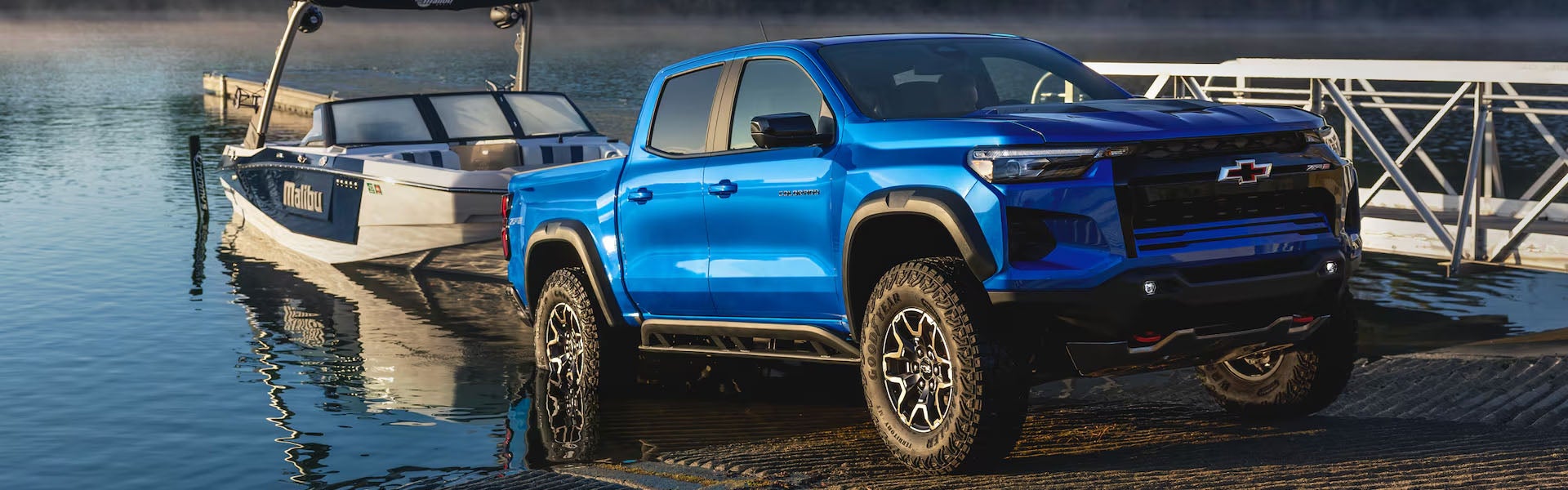
A 2026 Chevy Colorado 4WD calls for transfer case fluid every 100,000 miles in normal service or every 50,000 miles in severe service. After a tow from Hamburg to Blue Marsh Lake, a fresh leak or unusual noise on the 2026 Colorado calls for a front or rear axle fluid check before the mileage interval. A new whine, clunk or 4WD warning gives the shop a separate problem to diagnose before changing fluid.
By Outten Chevrolet of Hamburg

Key Numbers
- A 2026 Colorado 4WD calls for a transfer case fluid change every 100,000 miles in normal use.
- The severe-use interval for that transfer case is every 50,000 miles.
- The Colorado lists automatic transmission fluid and filter at 45,000 miles under severe use.
- Pressure washing the transfer case or axle seals can force water into the oil.
When is transfer case fluid due on a Colorado 4WD?
The transfer case fluid interval is 100,000 miles for a 2026 Colorado 4WD in normal service and 50,000 miles for severe service. Check the owner’s manual for severe-use examples, including vehicles that frequently tow or carry loads or see other demanding conditions. A Colorado near Hamburg that pulls a trailer regularly to Blue Marsh Lake may have a different schedule from one that occasionally carries a light load. If you bought the truck at 55,000 miles and it has no record of a transfer case fluid change, compare its use with the 50,000-mile severe schedule before booking service. The Colorado maintenance guide also lists the engine oil and tire schedule.
Colorado transfer case and transmission
A severe-use automatic transmission fluid and filter service comes due every 45,000 miles on this model. The transfer case is a separate item at 50,000 miles. Ask for separate invoice lines so you can tell when each interval next comes due.
When should I have the front or rear axle oil checked?
On a 2026 Colorado, Chevrolet calls for a front or rear axle fluid check when a leak or unusual noise is suspected. The manual also directs severe-use owners with a limited-slip differential to check the schedule for rear axle fluid service. A wet axle end near the wheel can send the shop toward the axle seal, while a wet center housing points to another inspection area. If the truck leaves 2 separate spots at home in Reading or Pottsville, photograph their places under the parked vehicle.
Chevy transfer case and axle seals
A direct pressure-washer stream at any of the 3 housings can drive water past an output seal. Have the Chevrolet service department inspect the lubricant if water reached the axle housings or transfer case.
Will a fluid change stop a driveline whine or clunk?
A new driveline whine calls for checking the axle oil level and whether the sound changes when gear teeth are loaded under acceleration. A sound that changes when you lift off the accelerator gives the technician a different condition to reproduce from one that changes when you steer. Save the speed at which you hear it and whether it began after towing or after a tire or axle repair. A whine at 35 mph on PA Route 61 toward Schuylkill Haven gives the technician a speed to reproduce under acceleration and while coasting. A clunk heard once when you select Reverse is a different observation to put on the order.
Chevy transfer case warning
A 4WD message can give the shop a code and a starting point even if it clears when you restart. Photograph the displayed message when safe. Tell the shop whether the 4 Hi light kept flashing or stayed on steadily during the noise.
Why does my Colorado bind in a tight turn?
On dry pavement, 4 Hi can make a tight turn feel like the tires are hopping because the front and rear driveline are coupled for low-traction use. Chevrolet directs drivers to use 2 Hi on normal paved roads with good traction and AUTO, if equipped, in changing conditions. Once the roads are dry between Lebanon and Hamburg, follow the manual to select the correct mode and wait for the shift indicator to finish. If the truck still binds in the proper mode, report that to the shop.
Chevy 4WD mode and inspection
Give the technician the selected mode, the road surface and the steering direction. A bind that occurs at full lock in 2 Hi needs a different check than a bind felt only while 4 Hi is engaged on dry pavement.
What should a Chevy driveline service estimate include?
Ask for the transfer case, front axle and rear axle to be listed by component where applicable. For each line, confirm the fluid specification, amount and labor. Put a leak diagnosis or warning code on its own line. At Outten Chevrolet of Hamburg, check the service menu and bring the old invoices to a driveline service appointment. If you come from Reading, leave the area around a fresh leak alone so the source is easier to see.
Chevy 4WD fluid-service offers
Review Chevrolet service specials for the exact work listed. Ask whether a 4WD service offer covers only the transfer case or includes axle oil for that build.
Chevy driveline service notes
Send the odometer and last transfer case service date to the Hamburg service team. A truck that went from occasional towing to towing weekly may now fall under the severe schedule.
Chevy Driveline Fluid FAQs
How often is transfer case fluid due in a 2026 Colorado 4WD?
It is due every 100,000 miles in normal service or every 50,000 miles in severe service.
Does my two-wheel-drive Colorado use transfer case fluid?
The 4WD transfer case interval does not apply to a two-wheel-drive Colorado. Follow the applicable rear axle and transmission instructions.
Can axle oil be low without a puddle in the driveway?
Yes. Tell the technician about wet areas on the housing, near the wheel or around a seal, even if no fluid reaches the ground.
Can I ask for just a fluid change when I hear a clunk?
Ask for the noise to be checked first. Tell the technician whether it occurs when changing direction, under acceleration or during a turn.
Does the transmission fluid interval cover the transfer case?
No. On a severe-use 2026 Colorado 4WD, automatic transmission fluid and filter are due at 45,000 miles and transfer case fluid at 50,000 miles.

