


\
Blog / Hamburg Chevrolet Dealer

How Does the 2026 Chevy Traverse Z71 Handle Snow?

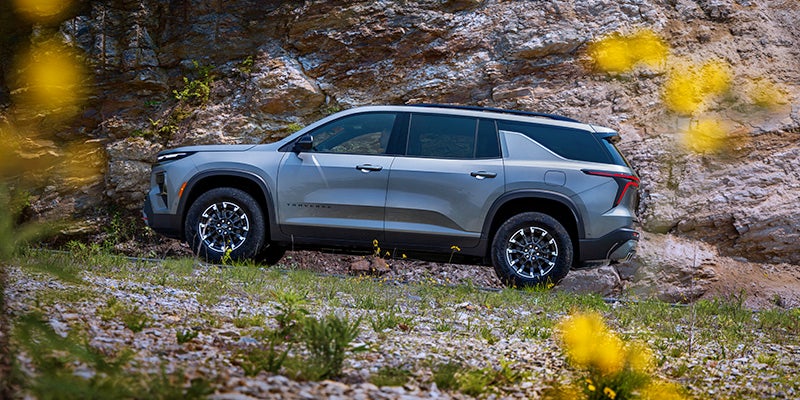
Silver 2026 Chevrolet Traverse shown from the side on rocky ground.

The 2026 Chevy Traverse Z71 has standard twin-clutch all-wheel drive (AWD) for getting power to the rear wheels when traction is limited. On PA Route 61 over Blue Mountain north of Hamburg, the twin-clutch system can send torque to either rear wheel as grip changes. Use AWD mode on snowy pavement and save Terrain Mode for rough ground at very low speeds.

By Outten Chevrolet of Hamburg
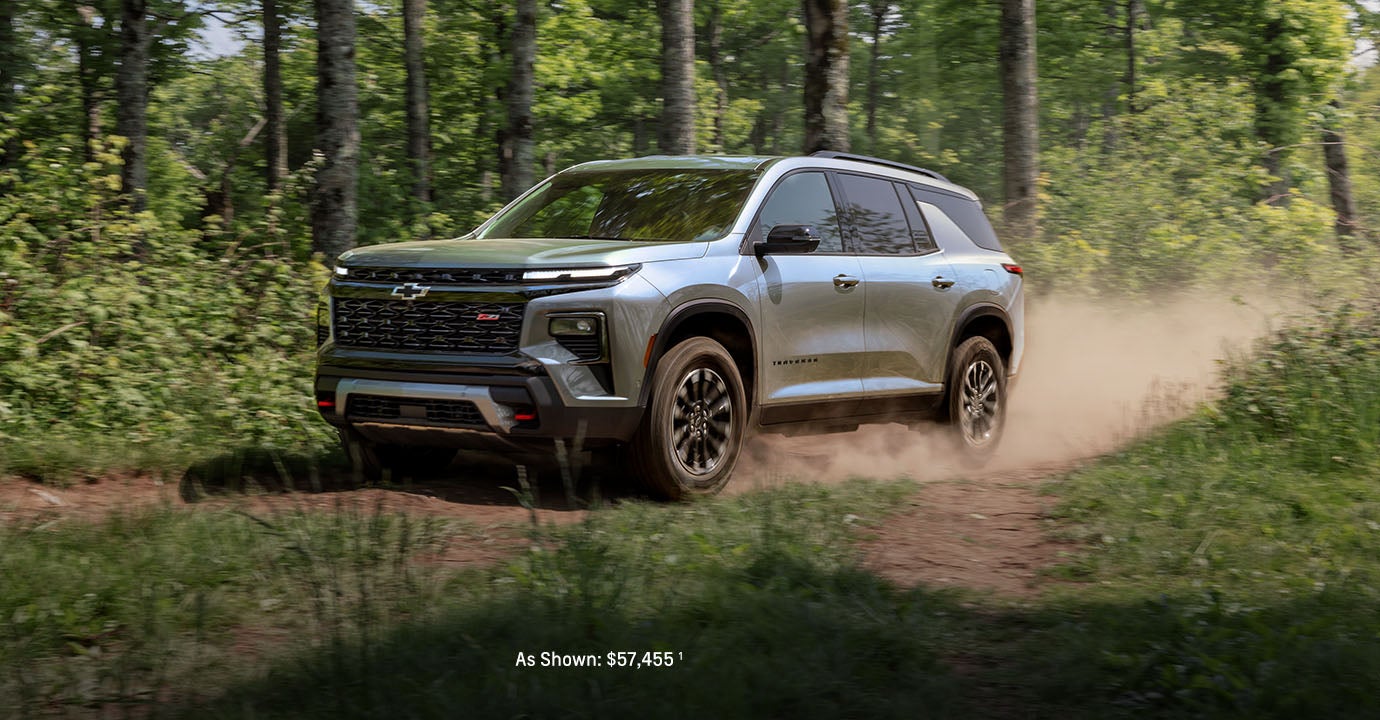
A 2026 Chevrolet Traverse SUV is shown from the front and side. The Chevrolet Traverse exterior photo shows the wheels and cabin of the three-row model.

Key Numbers

  • Twin-clutch AWD is standard on the 2026 Traverse Z71.
  • The Z71’s factory all-terrain tires ride on 18-inch wheels.
  • The Traverse Z71 seats 7 across 3 rows.
  • Hill Descent Control uses automatic braking on the Traverse Z71.

What does the Traverse Z71 twin-clutch AWD do?

The twin-clutch AWD system can vary the drive sent to the rear wheels. When a tire has less grip pulling away from a Route 61 junction outside Hamburg, the system can direct some power to other wheels. That is a benefit during acceleration or while climbing a snowy grade. Stopping still depends on the tires and the road surface, so the driver who gets up a hill still needs braking room on the way down.

Traverse Z71 drive power near Blue Mountain

The 2.5-liter turbo engine and eight-speed automatic drive the Z71. On a rolling stretch of Route 61 near Blue Mountain, spreading drive power to the rear wheels helps the SUV get moving when the front tires have a slick patch under them. The 2026 Chevrolet Traverse inventory is where shoppers can look for this specific Z71 equipment and its seven-seat cabin.

Which Traverse Z71 mode is for snowy pavement?

The 2026 Traverse owner’s manual describes AWD mode for paved roads with reduced grip, and Terrain Mode for very slow travel on rough, uneven ground. AWD is the useful choice for the Z71 on a slick paved trip between Reading and Hamburg. Terrain Mode has a different job on a slow, rutted approach. It can adjust low-speed response and add braking as the driver lifts off the accelerator.

Traverse Z71 Terrain Mode on uneven ground

Terrain Mode is more relevant at walking pace on rough ground than during an I-78 commute. On a steep, irregular access road it can make small speed changes easier to control as a wheel crosses a rut. A snow-covered paved road on the way to Schuylkill Haven still calls for lower speeds and longer following distances.

What tires come on the Traverse Z71?

The factory Z71 all-terrain package uses 18-inch wheels. Winter tires use tread compounds designed to stay flexible when the temperature drops. A driver who covers cleared roads between Hamburg and Reading most days has a different use from an owner who starts out before roads are treated and crosses a higher grade near Pottsville.

Traverse tire pressure on cold mornings

The 2026 Traverse door placard sets the recommended cold pressures for the vehicle. Air pressure can drop in colder weather, making a cold reading useful after a sharp temperature change. The Chevrolet service department can check wear across the tread. Service and tire specials can be used when an offer matches the installed size and the tire work booked.

When do you use Hill Descent Control on the Traverse?

Hill Descent Control can apply the brakes to help maintain a low speed during a steep descent. On a slow approach to an uneven lane, the driver keeps steering while the vehicle helps control speed. The feature is for short, low-speed situations. On a descent back toward Reading with traffic around the Traverse, speed and stopping distance are still decisions for the driver.

Traverse Z71 hill descent on a low-speed grade

The Traverse owner’s manual specifies the equipment, speeds and operating conditions for Hill Descent Control. The skid plate and suspension on the Z71 remain part of the SUV’s off-road setup. The Chevrolet service appointment form can be used to book a check if the Traverse shows a drive system warning that stays on.

How much room does a Z71 have for winter gear?

The Traverse Z71 has seven seating positions. With all rows up, 22.9 cubic feet of cargo space remains for boots and bags. Bringing four people instead of seven makes it possible to fold the third row for more floor length, and the Traverse has up to 98 cubic feet of cargo room with both rear rows folded.

Traverse Z71 cargo after a game in Reading

Seating and cargo share the back of the cabin. On a game day at FirstEnergy Stadium, the Traverse Z71 can carry seven people with boots and gear behind the upright third row. Fewer riders for a weekend near the Schuylkill River leave more of the Traverse available to carry gear inside, away from highway spray.

Traverse Z71 and tire service in Hamburg

Outten Chevrolet of Hamburg can help with a winter tire plan suited to the 18-inch Z71 wheels. The store serves drivers on Route 61 and I-78 from its Hamburg location. Outten Chevrolet’s dealership hours and the Hamburg Chevrolet contact page give owners a route to the dealership for an equipment question or tire visit.

2026 Traverse Z71 snow FAQs

Is the Traverse Z71 all-wheel drive?

Yes. The 2026 Z71 has twin-clutch AWD as standard equipment. The Z71 also includes Terrain Mode and Hill Descent Control. The AWD hardware helps deliver power where there is grip, while the road surface and tire condition still determine how much grip the Traverse can use.

Does the Z71 come with winter tires?

Chevrolet lists all-terrain tires on the Z71’s 18-inch wheels. Those are the factory equipment listed for the trim. A dedicated winter setup is a separate tire choice, usually made as four matching tires for consistent grip when turning, braking and accelerating.

Is Terrain Mode for highway snow?

The 2026 Traverse manual reserves Terrain Mode for slow travel over rough ground, such as a deeply rutted trail. On a snowy stretch of paved I-78, the relevant mode is the one specified for reduced traction on paved roads.

Does AWD shorten the Traverse’s stopping distance?

AWD helps the Traverse put power down when driving away from a stop. Stopping and turning depend on the tires’ grip where they meet the road. A patch of ice can still lengthen a stop even when the vehicle accelerates cleanly onto Route 61.

Does the Z71 have a third row?

Yes. The Z71 seats seven and uses a pair of second-row captain’s chairs. Leaving the third row up preserves all seven belts and still leaves 22.9 cubic feet of cargo room behind row three for smaller bags.
Posted in:

Related Posts

Exterior view of a 2026 Chevrolet Suburban

2026 Suburban Duramax Fuel Budget for Reading

A rear-wheel-drive 2026 Chevrolet Suburban with the 3.0-liter Duramax can cover up to an estimated 728 highway miles on its 28-gallon tank. A full 28 gallons would cost $112 if diesel were $4 a gallon. At the EPA’s combined 23 mpg, driving 230 miles in a week would use 10 gallons and cost $40 at that same example price. By Outten Chevrolet of Hamburg Key Numbers The 2WD diesel’s 28-gallon tank is the basis for the 728-mile highway estimate. EPA estimates 21 mpg city, 26 mpg highway and 23 mpg combined for the 2WD diesel. At $4 a gallon, a 20-gallon stop is $80 and a 14-gallon stop is $56. Set aside $160 and 40 gallons for four workweeks on the example commute. A 240-mile towing trip at an example 15 mpg would use 16 gallons and cost $64 at $4 per gallon. How much does it cost to fill a Suburban Duramax? Buying all 28 gallons at $4 a gallon comes to $112. Most stops are smaller because some fuel is still in the tank. A half-tank fill at that price is $56. For a 20-gallon stop, a change from $4 to $4.50 raises the bill from $80 to $90. A receipt showing 20 gallons after a 430-mile drive works out to 21.5 mpg. That gives you a local number to budget from if your next week around Hamburg and PA Route 61 looks like the last one. Use the gallons on the receipt and the miles between fills. At that observed rate, a 230-mile week uses about 10.7 gallons, or just under $43 at the example price. A change from $4 to $4.50 a gallon takes the same week to roughly $48 without driving any farther. How do I budget diesel for a week around Reading? At the combined 23 mpg rating, a 115-mile week takes five gallons, or $20 at the example diesel price. A longer 345-mile week takes 15 gallons and costs $60 at the same price. Budget a longer weekend drive separately if it falls outside the miles you normally put on the SUV. For a workweek on PA Route 61 with Reading errands and a trip to Blue Marsh Lake, add the weekend miles before working out the gallons. Shoppers checking 2026 Suburban trims can use the EPA rating that comes with their chosen engine and drive type. How far can the diesel Suburban go on a full tank? The 728-mile highway figure uses the full 28 gallons at 26 mpg. In mixed driving at the EPA’s combined rating, the same full-tank calculation comes to 644 miles. A week on local streets and US Route 222 may be closer to that combined estimate than to the highway figure. On a steady drive along Interstate 78, the Suburban’s miles-to-empty reading can help you choose a fuel stop with some fuel still in the tank. A week of starts and stops between Reading and Hamburg can move the reading down faster. The 2026 Suburban model page identifies the diesel and the other engine choices. What happens to Suburban fuel use when I tow? A 240-mile towing trip at an example 15 mpg needs 16 gallons, or nearly seven more than the 9.2 gallons at the highway rating. At $4 per gallon, the estimated towing cost is $64. The same distance at the EPA highway rating comes to about $37. That is about $27 more to allow for fuel on the towing trip, using the same pump price. The grade over Blue Mountain and stop-and-go traffic on PA Route 61 near Hamburg can change the miles per gallon you see with the same camper. The Chevrolet service department can check a drop in mileage that comes with low tire pressure, a warning light or a change in how the Suburban runs. How do I check which Suburban the 728-mile figure applies to? The range calculation uses the 3.0-liter Duramax in a two-wheel-drive 2026 Suburban. A four-wheel-drive model or gasoline V8 has its own label. The new Chevrolet inventory identifies the engine and drive type on individual vehicles. The Hamburg showroom can identify a Suburban’s EPA rating when a shopper drives in from Kutztown or Reading. For a regular commute, use the rating and the price of the fuel that specific model takes to calculate the expected weekly gallons and cost. Frequently Asked Questions How much range does the 2WD Duramax add with ten gallons? At the highway rating, 10 gallons represents about 260 miles. In the EPA city estimate, those same gallons represent about 210 miles. Can I really go 728 miles without stopping? That is a full-tank estimate at the EPA highway rating. Plan your stop before empty and leave room for slower traffic, grades or heavier loads. What mpg should I use for mostly city driving? The EPA city estimate for the 2WD Duramax is 21 mpg. Use your own recorded mpg after you have several tanks of comparable driving. How much does a half tank cost at $4 a gallon? A $56 fill buys 14 gallons at the example price. At $4.50, those same gallons cost $63. Can I use the same budget while towing? Use the mpg you record with your trailer. A driver seeing 15 mpg can budget one gallon for each 15 miles of the towing trip. Outten Chevrolet of Hamburg · 1080 S Fourth St, Hamburg, PA 19526 · (610) 674-0598 Ask about a Suburban Duramax Explore the 2026 Suburban

2026 Chevrolet Colorado exterior

Transmission Service for a Colorado That Tows

If you tow frequently with a 2026 Chevy Colorado, Chevrolet calls for a transmission fluid and filter change every 45,000 miles. Chevrolet’s normal-use schedule has no fixed interval for that job. On a climb, Tow/Haul can hold the truck in a lower gear so it shifts less often with a trailer. By Outten Chevrolet of Hamburg Key Numbers 45,000 miles is Chevrolet’s transmission fluid and filter interval for frequent towing. DEXRON-HP is the specified fluid for the 2026 Colorado’s eight-speed automatic transmission. DEXRON-VI is specified for the separate 4WD transfer case. The Colorado can display transmission fluid temperature in the Driver Information Center. Chevrolet’s normal-use schedule lists no set interval for Colorado automatic transmission fluid and filter service. Does the 45,000-mile transmission interval apply if I tow only occasionally? Frequent towing puts the Colorado on Chevrolet’s severe-use schedule, with a transmission fluid and filter change at 45,000 miles. Pulling a landscape trailer along PA Route 61 several days a week or taking a loaded camper over Blue Mountain regularly fits that schedule. A truck that rarely pulls a small trailer may stay on the normal schedule. The interval is counted in odometer miles, including miles without the trailer. If you started using the truck to tow regularly at 20,000 miles, your first severe-service appointment comes at 45,000 miles on the truck, not 45,000 towing miles later. The 2026 Colorado maintenance schedule puts that appointment alongside the truck’s other services. What does Tow/Haul do when I pull a trailer up Blue Mountain? Tow/Haul can hold a lower gear over Blue Mountain, reducing the back-and-forth shifts you can feel on a climb with the camper attached. The driver display can show fluid temperature. If a hot-transmission warning appears, Chevrolet calls for pulling over safely and letting the engine idle until the fluid cools and the message clears. A warning that returns on a climb or while backing a loaded trailer can point to a problem before the scheduled fluid change. The technician can check the cooling system, fluid level and transmission operation with that towing symptom in mind. The Tow/Haul setting also uses Trailer Sway Control, which can intervene if the trailer starts to sway. After an overnight campground stop the mode returns to Normal, so the driver can use the mode indicator to see whether Tow/Haul is active for the return trip. A quick stop with the engine switched off will usually leave it in Tow/Haul. What is included in a Colorado transmission fluid and filter change? The scheduled job includes DEXRON-HP fluid and a new filter for the eight-speed automatic. The shop sets the fluid level using Chevrolet’s service procedure. If there is fluid on the driveway, finding the leak comes before topping up and setting the level. The Outten Chevrolet of Hamburg service department can price the DEXRON-HP fluid, filter and labor as one job. A leak repair or damaged part adds a separate line. A hard shift or delayed engagement can also warrant a diagnosis during that appointment. Is transfer case fluid the same as transmission fluid? The 4WD transfer case takes DEXRON-VI, and the eight-speed automatic takes DEXRON-HP. A rear-wheel-drive Colorado uses the automatic transmission fluid and has no four-wheel-drive transfer case to service. The two jobs on a 4WD truck use different fluids. Highway towing from Reading and low-speed work near Shoemakersville put different demands on the 4WD hardware. The current service offers show available maintenance discounts, and a service estimate can itemize the automatic and transfer case work separately. What if the Colorado shifts hard or leaks fluid before service is due? A leak or hard shift can justify a shop visit before 45,000 miles. Chevrolet’s Colorado automatic has no routine owner fluid-level check. A leak can lower the fluid level enough to affect shifts or raise the temperature. The shop can trace the source and set the level after repair. The service hours on Route 61 help drivers from Reading, Kutztown or Shoemakersville plan a drop-off. On a used Colorado without receipts, a prior transmission service record can show whether the fluid and filter were replaced at the first severe-use visit. A shift complaint can be checked while the truck is there. A 45,000-mile visit also gives the shop a chance to measure brake and tire wear on a Colorado that pulls a trailer most weekdays. Those checks can catch a thin pad or uneven tread ahead of the next loaded trip. Frequently Asked Questions When is my first severe-use visit if I start towing at 20,000 miles? The first scheduled fluid and filter change is at 45,000 on the odometer. That leaves 25,000 miles in this example. Will Tow/Haul stay on after a fuel stop? A quick stop for fuel keeps the setting active. If the Colorado sits for more than four hours before restarting, it returns to Normal, so you may need to select Tow/Haul again for the next leg. Do I need this service if the truck shifts normally? The severe-use interval is scheduled maintenance. A truck can shift normally when the fluid and filter are due. Do I need a transmission service at 45,000 towing miles or total miles? Use the odometer. The severe-use interval is based on total vehicle miles. Can the shop look at a warning during the same visit? Yes. The shop can check for a stored warning and inspect the fluid level and cooling system during the fluid and filter visit. Outten Chevrolet of Hamburg · 1080 S Fourth St, Hamburg, PA 19526 · (610) 674-0598 Schedule Colorado transmission service Ask the Hamburg shop for an estimate

2027 Chevrolet Silverado 2500 HD towing a utility vehicle on a dusty trail

2027 Silverado 2500 HD Trailering Features for Reading Drivers

Available equipment shown. For a Reading driver who tows an equipment trailer every week, the most useful Silverado 2500 HD options are the ones that help with the whole trip: coupling the trailer, moving through traffic, descending a grade and backing into a narrow space. The available camera system, trailer-side alerts and integrated powertrain controls each support a different part of that work. The 2027 truck pairs those features with a 412-hp gasoline V8 or an available 555-hp Duramax diesel. A loaded trailer headed along Route 61 toward Schuylkill Haven puts different demands on the truck from an unloaded errand in Greater Reading. For regular trailer owners, the towing equipment deserves attention alongside cab comfort and trim level. Key Numbers Available camera system: up to 14 views. Duramax output: 555 hp and 1,230 lb-ft from the available 8.3L V8. Both engines: Allison 10-speed automatic. Tow/Haul: coordinated steering, braking and powertrain control. Trailer-side alerts and tire monitoring require the appropriate equipment. Cameras Earn Their Place Before the Trailer Moves A trailer can block areas that the truck’s mirrors would otherwise show. Available camera views provide different perspectives for hitching and maneuvering, with up to 14 views across the equipped system. Some views need a compatible trailer, an accessory camera and installation. That makes the actual camera package an important part of a frequent-towing truck. A Reading owner using an equipment trailer throughout the week has repeated hitching and parking work, even when the destination is close. A family taking a boat toward Blue Marsh Lake also has low-speed maneuvering at the beginning and end of the trip. The camera equipment supports those moments without changing the truck’s certified tow rating. Loaded Driving Engages Coordinated Controls Tow/Haul Mode coordinates engine mapping, transmission behavior, steering assistance and electronic brake boost. With diesel power, exhaust braking and grade-braking strategies join that coordination. The truck can respond to a loaded combination as a system, rather than leaving the driver with unrelated powertrain and chassis settings. Electric power steering is part of the 2027 HD chassis, and Tow/Haul increases steering damping for trailer control. eBoost braking supports brake response under load. For Schuylkill Haven and Pottsville travel along Route 61, those features address steering feel, changing speed and downhill sections while the driver stays responsible for the combination. Available equipment shown. The Duramax Adds a Downhill Tool The available 8.3L Duramax produces 1,230 lb-ft and uses an Allison 10-speed automatic. Its exhaust brake works with the transmission and grade-braking strategies to help manage speed on descents. On ridge-and-valley roads, that gives a regular trailer owner another tool for controlling the loaded truck and trailer. The engine’s hardware includes a compacted graphite iron block, forged rotating components, a variable-geometry turbocharger and dual-stage charge cooling. The 2027 Silverado 2500 HD engine specifications set out its output and chassis figures. The model overview connects that powertrain with the truck’s available body and cabin choices. Trailer Alerts Support the Highway Portion With Trailer Side Blind Zone Alert equipped, detected vehicles beside a compatible trailer trigger a visual alert. Available trailer tire pressure and temperature monitoring adds information about equipped trailer tires. The in-vehicle trailering app supports trailer setup and monitoring. Each feature requires the appropriate truck and trailer equipment. A truck moving from Reading onto US Route 222 or I-78 encounters traffic after the trailer is already coupled. Side alerts add information about the longer combination, while tire monitoring concerns the trailer’s running gear. Visibility, weather and feature limitations still matter, and the driver continues to watch mirrors, road space and traffic. Cab and Hitch Choices Still Set the Truck’s Job A Crew Cab offers passenger room for up to six with the appropriate seat arrangement. Its 6-foot-9-inch bed uses a 159-inch wheelbase, while the 8-foot bed uses 172 inches. Those choices affect space for people and cargo, including a work crew from Lebanon or a household carrying gear from Bally. For a qualifying diesel Crew Cab 4WD short bed, maximum gooseneck towing is 22,400 lbs with the Max Trailering Package and gooseneck hitch. Maximum conventional towing is 20,000 lbs with the required package. The complete towing reference separates cab, bed, drivetrain and hitch requirements, keeping those limits attached to the truck that earns them. Available equipment shown. Where to Put the Equipment Budget For frequent towing, prioritize the correct body, engine and hitch equipment, then the camera and monitoring features used on repeated trips. WT starts with a standard integrated trailer brake controller and work-focused cabin. The six-trim equipment reference gives the work, off-road and premium directions without making a luxury badge a requirement for towing. Blue Marsh Lake recreation via PA Route 183 and equipment hauling on Route 61 share hitching and load-control needs, even when the trailers are different. Regular trailer owners get value from equipment that supports those repeated tasks. Occasional unloaded driving gives cabin convenience a larger role in the purchase, alongside the truck’s actual work requirements. Regular Trailer Work Brings Service Needs Chevrolet lists frequent trailering, heavy loads, mountain driving and extended idling as demanding use. The Engine Oil Life System responds to operating conditions, and oil and filter replacement is required at least annually under Chevrolet guidance. Tires, brakes, fluid systems and the driveline also need their scheduled inspections and service. Silverado HD service at Outten Chevrolet covers that ownership side. The local truck FAQs address purchases and everyday equipment questions, while the Buyers Guide connects all the research topics. Outten Chevrolet of Hamburg offers financing applications and trade-in valuation for Reading-area buyers. Trailering Feature FAQs Which trailering features help during hitching and reversing? The equipped camera package supplies perspectives for lining up a hitch and maneuvering a compatible trailer at low speed. Its available fourteen-view range includes functions that need an accessory camera and installation. Mirrors and direct driver observation remain necessary wherever a view has limits or an obstruction. What changes when Tow/Haul Mode is selected? Selecting Tow/Haul engages responses suited to the attached load. Engine mapping and shift behavior work with the chassis electronics, while added damping changes steering assistance for trailer control. On a diesel truck, descent assistance also draws on the exhaust brake. The driver still controls speed and road position. Why does exhaust braking matter on Route 61 grades? The diesel’s retarding assistance reduces the work needed from the service brakes while descending a grade. That is useful for a loaded combination traveling through the terrain between Reading and Schuylkill Haven. It supplements normal braking; it does not remove the need for sound tires, maintained brakes or driver attention. Do trailer cameras increase the towing capacity? No. A visibility feature does not change the weight limits assigned to the truck’s body, drivetrain and hitch configuration. A trailer owner must satisfy both towing and carrying limits, including the coupling load carried by the pickup. Camera views help with the maneuvering and monitoring work inside those limits. How can Reading buyers shop these features at Outten Chevrolet? Outten Chevrolet of Hamburg lists Silverado 2500 HD trucks with their individual equipment and selling prices. Reading and Schuylkill Haven buyers can schedule a test drive or call (610) 674-0598. The dealership is at 1080 S Fourth St, with online financing and trade-in tools available alongside inventory. Shop Silverado 2500 HD inventory or schedule a truck test drive. By Outten Chevrolet of Hamburg